


Zoete aardappel kruiden: welke smaken passen er het beste bij?
Welke kruiden passen bij zoete aardappel? Warme en pittige smaken zoals ras el hanout, komijn, paprika en tijm, per bereiding uitgelegd voor oven, puree en tajine.


Quick answer
Vegetables taste better with oil, a good spice mix and the right cooking technique. At Moroccan Spicy Secrets we use five combinations: Za'atar with olive oil, Wok mix, Satay spices, roasted fennel seeds, and cumin with turmeric and paprika. Mix the spices with oil first, so they stick evenly to the vegetables.
 Wok mix
A tray of zucchini, carrot or cauliflower can look good on paper and still end up tasting bland. Usually, that's not the fault of the vegetables. There isn't enough flavour in the preparation, or the spices were added at the wrong time or in the wrong way.
We are an Antwerp-based brand for Moroccan spices and spice mixes, and the spices in our mixes are blended by hand. Our mixes are designed to make cooking easier, even on a busy weekday.
Below you'll find five combinations to choose from, which ones suit the oven, wok or pan, and when to add them. You don't need ten jars. One mix and a good oil are enough for a first try.
Vegetables taste bland when the spices are just loosely sprinkled on top and don't really stick to the vegetables. First mix oil with your spices, then the oil will carry the flavour and distribute it over the entire surface.
Spices don't stick well to dry vegetables. They fall off when you stir them or burn on the baking tray. Oil is the carrier that prevents this.
Therefore, first mix the spices with the oil in a small bowl, and only then pour the mixture over the vegetables. Toss everything well so that every piece is coated. This prevents some pieces from having too much flavour and others none at all.
Also pay attention to the tray. The vegetables will steam rather than brown, and browning is what gives them flavour. So give them space, use two baking trays instead of one overcrowded one, and make sure there is enough heat.
Salt is also important, but first check the ingredients list of your spice mix. Some mixes already contain salt. Taste after cooking and only add salt if necessary.
Five combinations quickly add more flavour to vegetables: Za'atar, Wok mix, Satay spices, roasted fennel seeds and cumin with turmeric and paprika. Each combination has its own flavour profile, so choose one that suits what you want to eat.
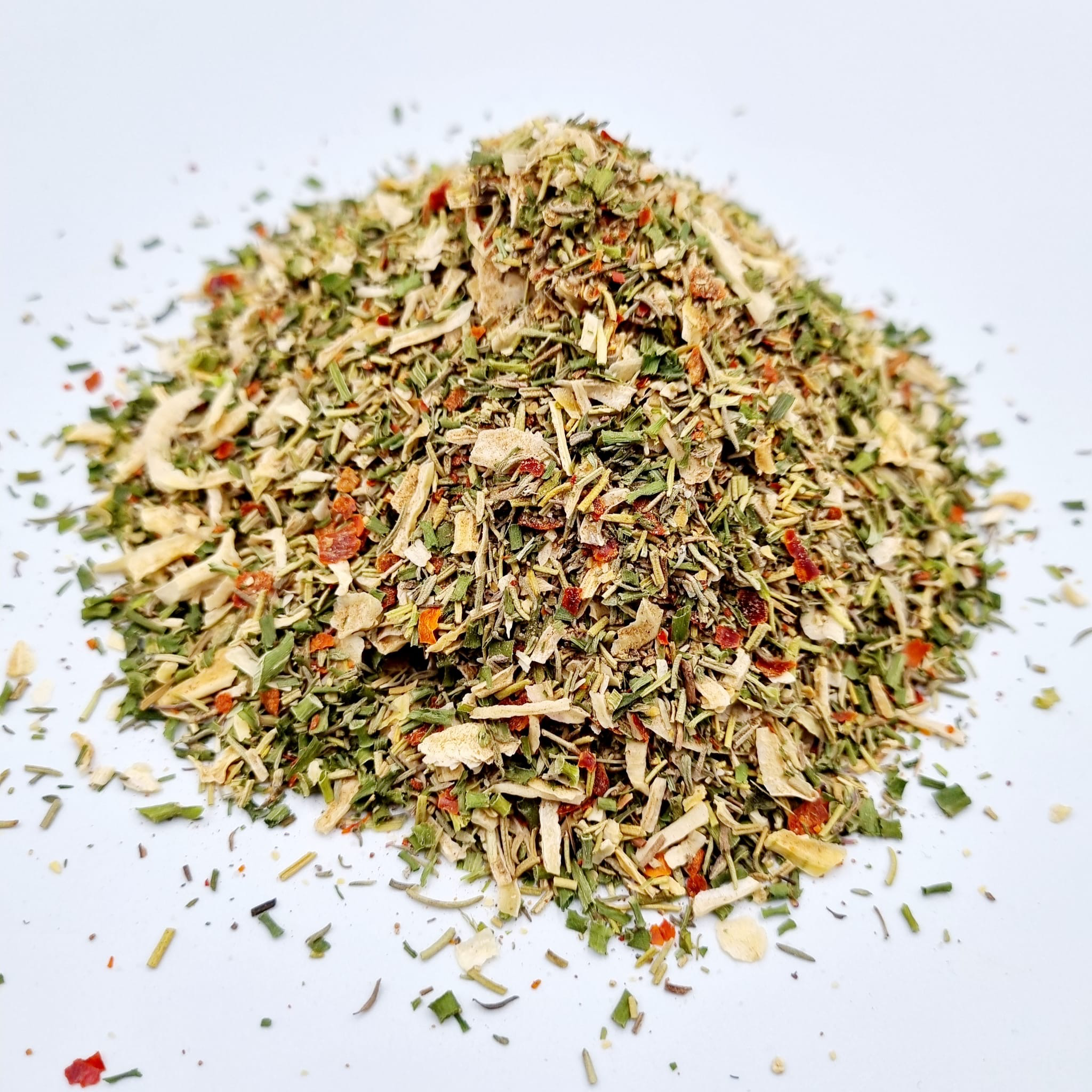
1. Za'atar with olive oil. Za'atar contains oregano, sumac and sesame seeds, among other things. Use it for roasted vegetables or as a dip for warm bread.
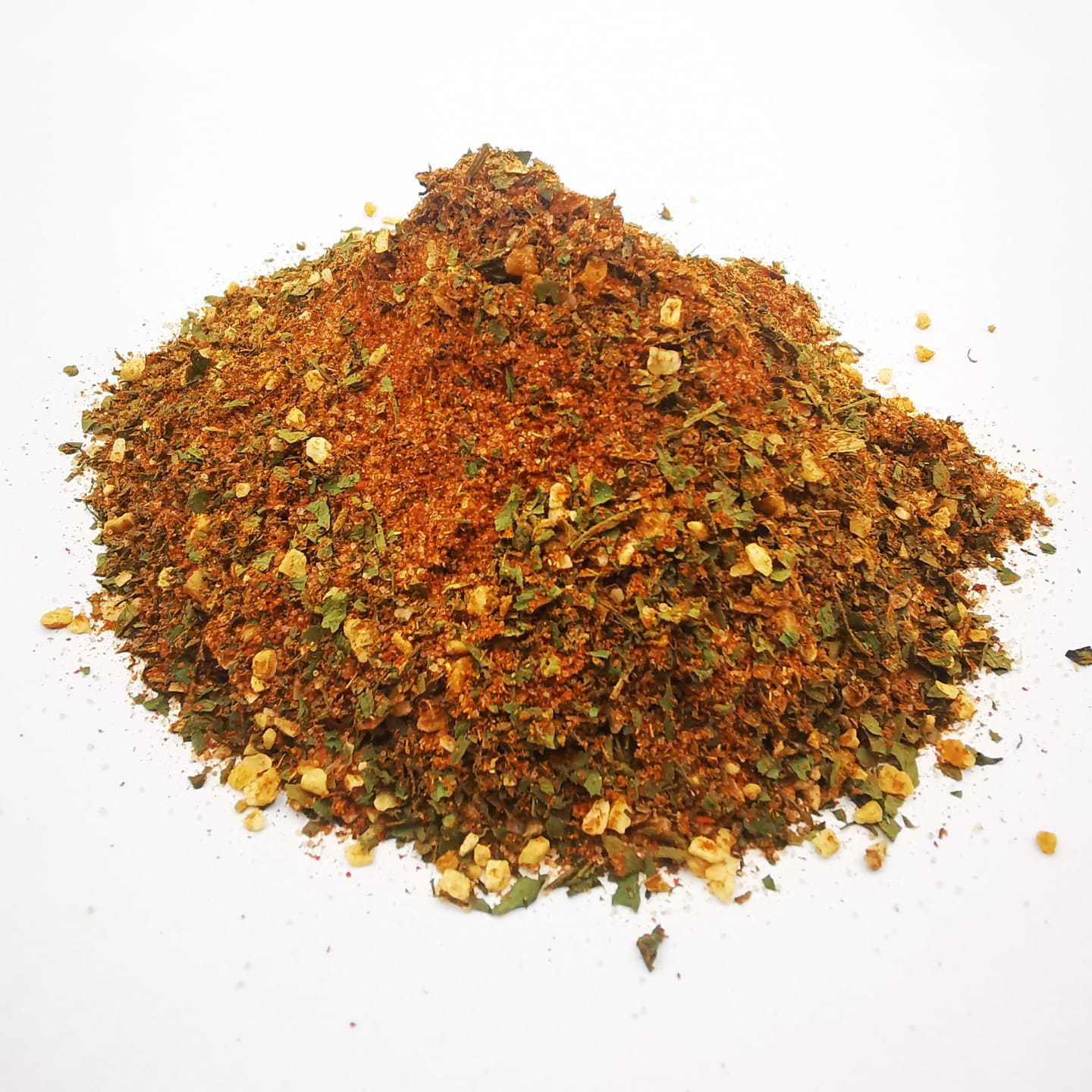
2. Wok mix. This mix combines cardamom, fennel seeds, sesame and curry. You can use it with chicken, lamb or vegetables on their own.
3. Satay spices. Ginger, lemongrass, coriander and a touch of sweetness give a fresh, slightly sweet flavour. They work in the pan, on the grill or on the barbecue, and also form the base for a satay sauce.
4. Fennel seeds. Roast them briefly in a dry pan and crush them.
5. Cumin, turmeric and paprika. These three together give a mild, warm Moroccan flavour. You can buy them separately from us as Cumin Powder, Turmeric and Mild Paprika.
The dosage varies by mix. Therefore, follow the instructions on the product page for each product and do not use a fixed ratio for all mixes.
 Za'atar
The cooking method determines which combination to choose: for the oven and baking tray, use Za'atar and the cumin-turmeric-paprika combination; for the wok and quick pan cooking, use Wok mix and Satay spices. The vegetable itself then determines the direction, sweet or savoury.
In the oven, vegetables have time to caramelise. Za'atar suits a savoury, fresh finish, while cumin, turmeric and paprika make the vegetables earthy and warm. For the pan or wok, choose a mix that quickly dissolves in the oil. Wok mix gives a warm tone, while Satay spices are sweeter and fresher with ginger and lemongrass.
Fennel seeds have their own place in a dry pan. First roast them briefly and crush them, and then use them as a separate addition to one of the other combinations.
For root vegetables and cauliflower, choose based on your taste preference. With Satay spices or fennel seeds, you lean into that sweetness; with Za'atar or cumin and paprika, you create a savoury contrast. Zucchini is mild and takes any combination well, so you decide how pronounced the flavour should be.
Add spices to vegetables at the time that suits the cooking method: beforehand for the oven and barbecue, during stir-frying in a wok, and afterwards for steamed vegetables. This allows the flavour to cook through without fine spices burning.
In a wok, the spices are added during stir-frying, towards the end. Fine spices burn quickly at high heat and become bitter.
After cooking, Za'atar with olive oil works well as a finish for warm vegetables, or as a dip for bread. For seeds such as fennel seeds, roast them dry in a pan first and then crush them to release the aroma.
If a mix already contains salt, only add extra salt after you have tasted it. Check this on the product's ingredients list.
The best time to add spices for each cooking method
| Cooking method | When to add spices | How to add |
|---|---|---|
| Oven or baking tray | Before cooking | Mix with oil beforehand |
| Wok | During stir-frying, towards the end | Sprinkle the spices in shortly before the end |
| Dry pan with seeds | Beforehand | Roast briefly and crush |
| Fennel seeds (roasted) | After cooking | Stir through oil or olive oil |
| Barbecue or grill | Before grilling | With oil, without an open flame |
You can already give vegetables a delicious flavour with one spice mix and a good oil, because the mix provides the flavour and the oil carries it to the vegetables. You don't need to look for a second mix or a row of individual spices.
Start with a small amount and taste as soon as the vegetables are cooked. You can always add more spices, but you can't take them out. Then add a pinch, mix well, and taste again.
You can also enhance a mix with a finish without buying extra spices. For example, sprinkle Za'atar with a dash of olive oil over warm vegetables just before serving. This gives the same vegetable a second layer of flavour on top of what you did during cooking.
The five spice combinations for vegetables side by side
| Combination | Flavour profile | Suits | Cooking method |
|---|---|---|---|
| Za'atar with olive oil | Spicy, with oregano, sumac and sesame seeds | Roasted vegetables and warm bread | Oven, or as a finish after cooking |
| Wok mix | Warm, with cardamom, fennel seeds, sesame and curry | Stir-fried vegetables, with or without chicken or lamb | Wok or quick pan cooking |
| Satay spices | Fresh and slightly sweet, with ginger, lemongrass and coriander | Vegetables from the pan, grill or barbecue | Pan, grill or barbecue |
| Fennel seeds (roasted) | Mild, sweet, with an anise flavour | Vegetables and side dishes | Roast dry in a pan first |
| Cumin Powder, Turmeric and Mild Paprika | Earthy and warm | Vegetables you want to season mild and savoury | Oven or pan |
Choose one combination that suits how you are cooking tonight. If the oven tray or baking tray is ready, take Za'atar. If you are cooking in the pan or wok, reach for the Wok mix or Satay spices. Mix the spices with oil first and then pour the mixture over the vegetables.
If you prefer to keep the flavour more neutral, use only oil with a pinch of one spice, for example Mild Paprika. Taste after cooking and only then add salt.
If you have zucchini, carrot or cauliflower at home, that is enough to get started with tonight. Note which combination you chose, then you will know next time whether you want more or less.
Go through these points before you start on the vegetables:
Taste first and salt afterwards, especially if you use a spice mix that already contains salt. Check the product's ingredients list for this. For vegetables that you let brown in the oven, you can add a pinch of salt to the oil. Keep in mind the salt already in the mix and taste again after roasting.
Yes, the Wok mix also works with a wok full of vegetables. Sprinkle the mix in towards the end while stir-frying. Start with a small amount and follow the dosage on the product page.
Yes, you can mix the herbs and the oil in advance, as long as you pour the mixture over the vegetables just before roasting. This way, everything is ready when you cut the vegetables.
After roasting, stir the vegetables through oil or olive oil with your herbs. The finishing touch does the work. Za'atar with a splash of olive oil over hot vegetables is the easiest choice. If you want it sweeter, choose Satay spices, and taste before adding salt.
Start with a mild combination: mild paprika with a little cumin and turmeric, mixed with oil in advance. This flavor is warm and not spicy. Satay spices have a hint of sweetness and pair well with sweet vegetables like carrots. Use a small amount of herbs at first and let children taste along, so you can adjust the flavor together.
Written by
Youssef Abou Allal, Founder at Moroccan Spicy Secrets
Youssef Abou Allal is the founder of Moroccan Spicy Secrets in Antwerp. The brand was born from the desire to bring the flavors of the Moroccan family kitchen to the table at home in a simple and practical way. Drawing inspiration from his family's cuisine, Moroccan Spicy Secrets developed spice mixes that help home cooks prepare both Moroccan classics and simple everyday dishes full of flavor. On the recipe blog, Youssef shares practical recipes, cooking ideas, and applications for herbs and spices.
LinkedIn Everything I make tastes bland: how to add more flavor to food with herbsDoes your food taste bland? Discover where it goes wrong with herbs: the timing, the form, and the combination. With practical steps and mixes from Moroccan Spicy Secrets.
 Adding flavor to food without salt: 7 herbs for more flavorAdding flavor to food without salt? Discover 7 herbs that replace salt, when to add them, and which mixes from Moroccan Spicy Secrets save you time.
 Adding flavor to ground meat: the best herbs without seasoning packetsAdding flavor to ground meat without seasoning packets: which herbs you need, how much to use, when to add them, and how to cook safely.
 How to season chicken deliciously? From basic herbs to Moroccan chickenHow do you season chicken deliciously? From salt, pepper, and paprika to Moroccan chicken with preserved lemon: when to season, how to do it, and which mix is suitable.
 Herbs for couscous: which herbs really add more flavor to couscous?Which herbs really add more flavor to couscous? You will read which herbs to use in which layer, when to add them, and which mixes make the work easier…

