


Zoete aardappel kruiden: welke smaken passen er het beste bij?
Welke kruiden passen bij zoete aardappel? Warme en pittige smaken zoals ras el hanout, komijn, paprika en tijm, per bereiding uitgelegd voor oven, puree en tajine.

Quick answer
Ras el hanout is a Moroccan spice blend with no fixed composition: every producer makes their own version. At Moroccan Spicy Secrets, the exclusive contains twelve spices, including star anise, cardamom, cloves, fenugreek, long pepper and paradise seeds. The flavour is warm, floral and spicy. The yellow version also adds colour to the dish.
 Ras el hanout exclusive
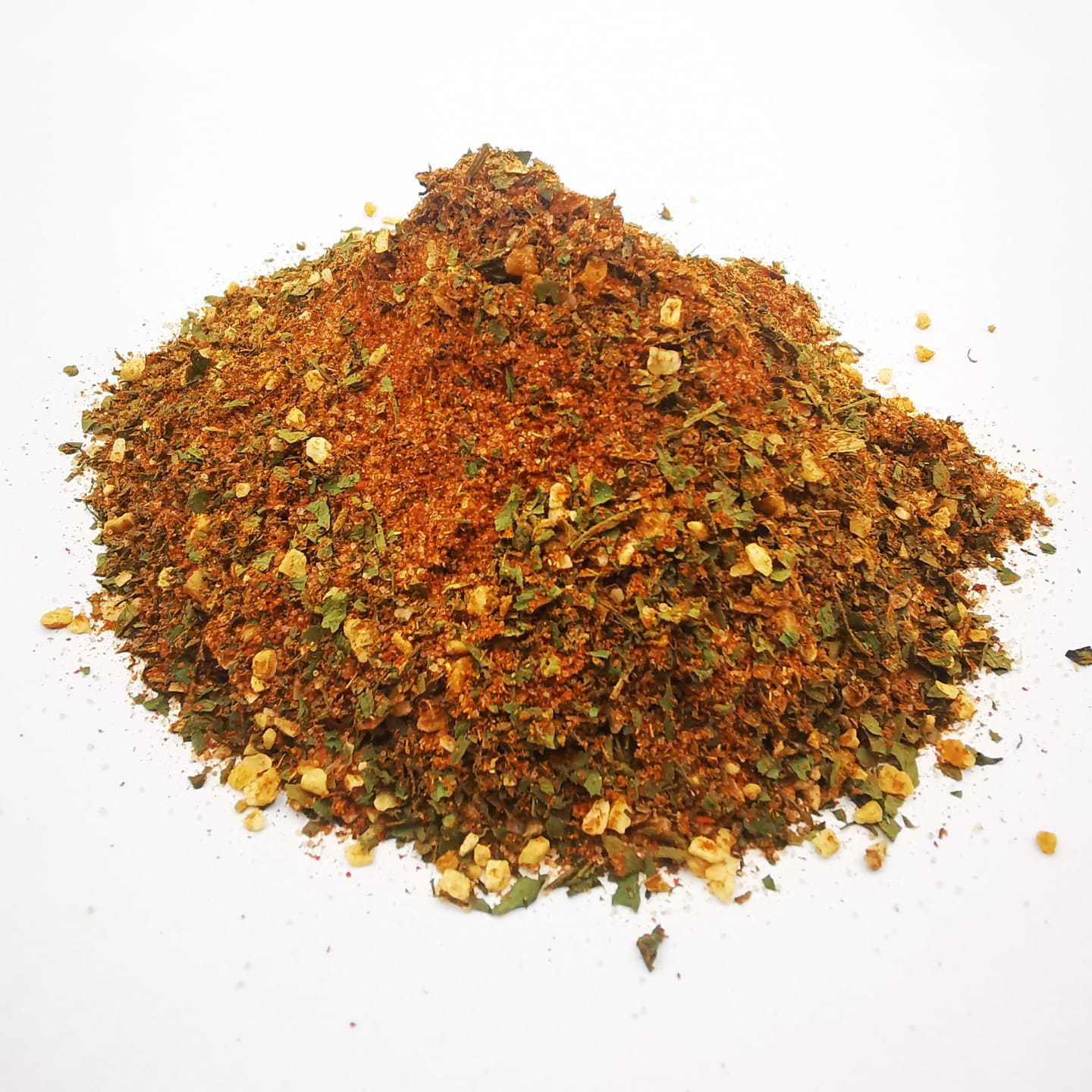
If you place two jars of ras el hanout side by side, you can immediately see that they are not the same. One is yellow, the other darker and more fragrant. This difference is no coincidence: with ras el hanout, the maker decides which spices go in and in what proportions.
I am Youssef, founder of Moroccan Spicy Secrets, an Antwerp-based brand for Moroccan spices, spices and tea. We blend our spice mixes by hand in Antwerp, using recipes from the family kitchen. That is why I can show you exactly what is in our own mixes and how that determines the flavour.
This way, you will know what to look for when you have a jar of ras el hanout in your hand, regardless of the producer. First, we will look at why there is no fixed recipe. Then we will go through the spices and the flavour, and explain how ras el hanout compares to other spice mixes.
Ras el hanout has no fixed composition because every producer, family and spice shop makes their own blend. There is therefore no universal recipe that is identical in every jar. The name describes a type of mix, not one fixed list of spices.
You can see that difference in the spice cabinet. One maker emphasises warm, sweet spices, another chooses more pepper or a fragrant, floral note. The number of spices also varies, and the proportions differ just as much. Two jars with the same name can therefore smell and taste different.
It is no different with us. We make our own mixes by hand in Antwerp, using a family recipe. Our version is therefore one of many, and not a standard that other mixes must meet. What is in it is stated on the product page and on the packaging.
Our Ras el hanout exclusive contains twelve spices.
We choose, grind and blend those spices by hand in Antwerp. Each spice is ground and blended into one powder, so you do not need to weigh or combine anything separately.
The full ingredients list is on the product page. Take that list from there and not from memory, because compositions can change. For allergens, the label on the packaging is always authoritative.
This ensures that no single herb dominates and each spice plays its own role in the whole.
This makes the exclusive particularly suitable for those who want to learn the composition themselves. You can place the list next to the aroma and flavour and thus discover which spice is responsible for what.
 Ras el hanout geel
You do not taste a single herb that dominates, but a whole that adds depth to meat, rice and tajines. It is not a hot mix in the sense of chili pepper, but rather an aromatic one.
The difference between our two mixes lies in colour and layering. The Ras el hanout geel gives colour, aroma and flavour to your dish. The typical yellow colour of many Moroccan dishes comes from this mix. A small amount is sufficient, so start sparingly and taste as you go.
In the Ras el hanout exclusive, sweet, floral and peppery notes alternate. You will notice this especially in dishes where the spices play the leading role.
My advice in short: choose yellow if you want the yellow colour and a warm base for meat, rice or tajine. Choose exclusive if you are looking for a richer, more layered flavour and take the time for it. For both, you follow the dosage on the product page, because it differs per mix.
If you confuse the three, you will get a different flavour than intended.
You use ras el hanout more broadly: in meat, rice, vegetables and stews.
That sounds similar, because cloves are also in our exclusive. You use it, for example, in a marinade for pork or duck.
You mix your za'atar with olive oil for warm bread.
Similar spice mixes and how they differ
| Mix | Spices mentioned | Cuisine |
|---|---|---|
| Ras el hanout exclusive | star anise, cardamom, cloves, fenugreek, long pepper, paradise seeds | Moroccan |
| 5 Chinese spices | cinnamon, ginger, nutmeg, cloves, black pepper | Chinese |
| Za'atar | oregano, sumac, sesame seeds | Middle Eastern |
| Satay spices | ginger, lemongrass, coriander | Indonesian |
When choosing a ras el hanout, you first look at the ingredients list on the label or the product page. There you can see which spices are in it and whether the maker has added salt.
That last thing determines how you continue cooking. If salt is in the list, taste the dish first before adding extra salt. This way you prevent it from becoming too salty.
Also read the label if you are taking an allergy or a diet into account. The composition of a mix can change, so the current label is always authoritative.
Finally, pay attention to the dosage. It differs per mix, because every composition differs in strength and flavour. Therefore, follow the instructions for use on the product page of the exact mix you buy.
Are you torn between our two versions? The Ras el hanout geel and the Ras el hanout exclusive each have their own product page with ingredients and use. Start with a small amount and taste as you go, so you can adjust the flavour to your own dish.
Ras el hanout geel and exclusive side by side
| Mix | Characteristic | Best suited for |
|---|---|---|
| Ras el hanout geel | Adds colour, aroma and flavour to the dish. A small amount is sufficient. | Meat, rice and tajines |
| Ras el hanout exclusive | Homemade mix of twelve spices with a layered flavour | Dishes in which the spices play the leading role |
| Dosage | Differs per mix, see the instructions for use on the product page | - |
Choose the Ras el hanout geel if you want colour and a warm base for meat, rice or tajine. Choose the Ras el hanout exclusive if you want to taste the flavour of twelve spices. For a first jar, yellow is the easiest start, because you can use it in many dishes.
If you would rather make one specific dish, then a targeted mix works better than a broad blend. For a tajine, that is the Tajine mix, which is tailored to that dish.
First read the ingredients list and the dosage on the product page of the mix you choose. Then put a small amount in your pan and taste as you go while cooking.
Go through this list before you start with a jar of ras el hanout:
That depends on the mix, because every producer decides whether it contains salt. I do not give a general answer for our mixes, because the composition is stated on the current product page and on the packaging.
You will mainly taste warmth and aroma. If you want more heat in the dish, add a hot spice separately and start with a small amount.
I don't have a fixed shelf life for you, because it varies per mix and is stated on the packaging. Always keep the jar tightly closed. If you notice that the aroma is weakening, the mix will give off less flavour. Then use a little more, or choose a new jar.
Yes, you can, and many families and spice shops do too. Because there is no fixed recipe, you choose which spices go in and in what proportions. Our mixes are the quicker way. We mix the spices, you serve the dish.
Add ras el hanout early, for example in a marinade or when browning meat and onions, so that the spices can release their aroma into the dish. With rice or a stew, stir the mix in before you add liquid. Stick to the dosage on the product page of your mix, and taste as you cook.
Written by
Youssef Abou Allal, Founder at Moroccan Spicy Secrets
Youssef Abou Allal is the founder of Moroccan Spicy Secrets in Antwerp. The brand was born from the desire to bring the flavours of the Moroccan family kitchen to the table at home in a simple and practical way. With inspiration from his family's kitchen, Moroccan Spicy Secrets developed spice mixes that help home cooks prepare both Moroccan classics and simple everyday dishes with great flavour. On the recipe blog, Youssef shares practical recipes, cooking ideas, and applications for herbs and spices.
LinkedInWhat is Ras el Hanout? Meaning, ingredients and use explainedWhat is ras el hanout? Read what the name means, which spices are in it, why every mix is different and how you use ras el hanout in your kitchen.Everything I make tastes bland: how to give food more flavour with spicesDoes your food taste bland? Discover where it goes wrong with spices: the timing, the form and the combination. With practical steps and mixes from Moroccan Spicy Secrets. Flavour food without salt: 7 spices for more flavourFlavour food without salt? Discover 7 spices that replace salt, when you add them and which mixes from Moroccan Spicy Secrets save you time.
 Flavour ground meat: the best spices without seasoning mixesFlavour ground meat without seasoning mixes: which spices you need, how much you use, when you add them and how to cook safely.
 How to make vegetables tasty? 5 spice combinations for more flavourMake vegetables tasty without the hassle: 5 spice combinations with Za'atar, Wok mix, Satay spices, fennel seeds and cumin, plus when you add them.

